Modern commercial and industrial construction is experiencing a paradigm shift. Builders are moving away from traditional multi-layer built-up roofs in favor of pre-fabricated composite sandwich panels. Conventional roofing methods require sequential installation of vapor barriers, insulation boards, and top membranes, often leaving the structure vulnerable to moisture ingress during construction and ongoing thermal bridging issues that drive up energy costs.
Sandwich panels, by contrast, integrate structural strength, insulation, and weatherproofing into a single engineered module. By combining multiple functions in a modular format, sandwich panels are reshaping roof design across industries. They offer superior performance, predictability, speed, and flexibility—key reasons why they are revolutionizing the construction landscape.
Key Takeaways
Integrated Performance: Sandwich panels unify insulation, structural support, and weatherproofing into one high-performance system.
Rapid Installation: Pre-engineered modules reduce on-site labor and installation timelines by up to 50%, minimizing cost and schedule risks.
Design Flexibility: Modular sizes and customizable cores allow architects to meet energy, fire, and acoustic requirements efficiently.
Long-Term Value: High-quality panels reduce operational expenses, maintenance, and energy consumption, delivering a positive total cost of ownership over decades.
How Sandwich Panels Transform Roof Design
Engineering Innovation Behind the Panels
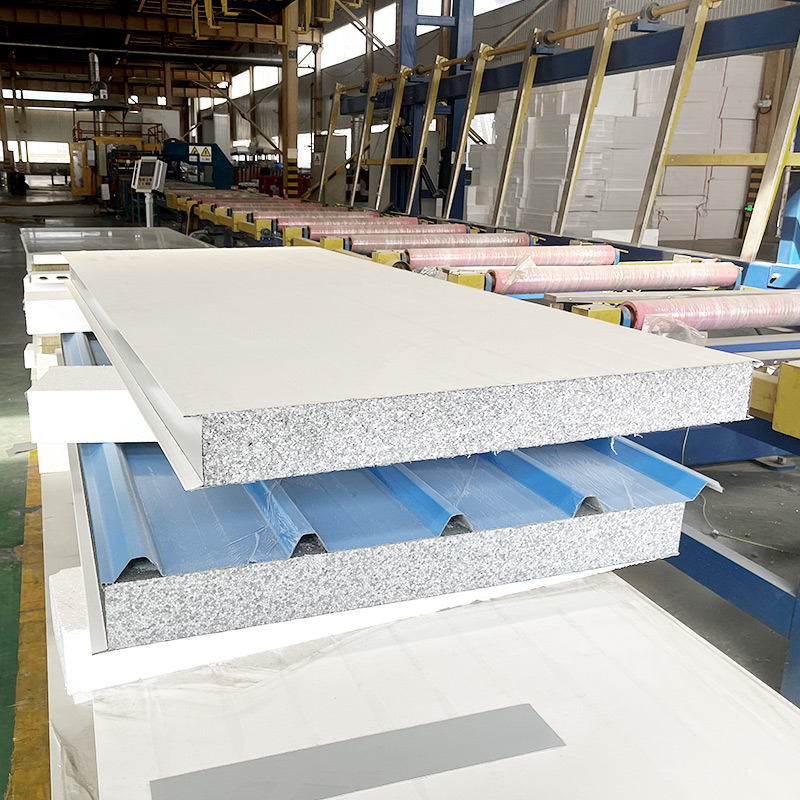
Unlike conventional roofing, sandwich panels are highly engineered structural systems. They typically consist of:
Outer Facing: Durable materials such as galvanized steel, aluminum, or fiberglass reinforced plastic (FRP) protect against physical damage, UV degradation, and chemical exposure.
Insulating Core: High-density materials such as polyurethane (PU), polyisocyanurate (PIR), or Rockwool PU Sandwhich Panel provide thermal efficiency, fire resistance, and acoustic dampening.
Inner Facing: Acts as a vapor barrier and creates a smooth interior aesthetic.
Interlocking Joints: Tongue-and-groove edges with self-drilling screws and elastomeric seals prevent water ingress, thermal bridging, and wind uplift.
This integrated design behaves structurally like an I-beam, offering exceptional strength-to-weight ratios. Fewer joints across the roofscape reduce leak potential, ensuring a watertight envelope while simplifying maintenance.
Core Material Selection
Different core materials cater to distinct operational needs:
PU (Polyurethane): Lightweight with excellent thermal resistance, ideal for cold storage or standard commercial facilities.
PIR (Polyisocyanurate): Offers similar thermal performance with enhanced fire resistance, suitable for high-value commercial properties requiring strict insurance compliance.
Rockwool: Heavier, non-combustible, and excellent for acoustic control, making it ideal for industrial plants where fire safety and noise mitigation are priorities.
By carefully selecting the core material, designers can achieve the perfect balance between insulation, fire safety, weight, and cost.
Installation Advantages
sandwich panels manufacturer provide factory-cut modules that reduce on-site labor and minimize installation risks. Panels arrive pre-fabricated to precise dimensions, reducing waste and the chance of improper sealing. Concealed fixing systems and interlocking joints streamline assembly, while panels support direct attachment of solar arrays or HVAC equipment without compromising structural integrity.
Operational and Financial Benefits
Energy Efficiency: High-density cores reduce heating and cooling loads, lowering utility costs over the building’s lifespan.
Maintenance Reduction: Durable coatings and interlocking designs prevent corrosion, internal condensation, and leaks, reducing maintenance needs.
Risk Mitigation: Watertight joints protect interior assets, minimizing potential damage from leaks, mold, or structural compromise.
These operational advantages translate into measurable ROI, offsetting the higher upfront cost compared to traditional roofing.
FAQ
Q: How long do PU sandwich panels typically last? A: When installed correctly, panels can last 25–40+ years, depending on environmental exposure, outer facing quality, and maintenance practices.
Q: Can solar panels be installed directly on a sandwich panel roof? A: Yes. Use standing seam profiles or non-penetrating brackets to attach panels without damaging the insulation core.
Q: Do composite roofs suffer from condensation? A: Properly installed panels with continuous insulation and sealed joints prevent condensation and thermal bridging.
Q: What is the difference between standard PU and a Rockwool core for roofing? A: PU offers lightweight, high thermal efficiency. Rockwool PU Sandwhich Panel is heavier, non-combustible, and provides superior soundproofing and fire resistance.
Conclusion
Sandwich panels are not just another roofing material—they represent a transformation in roof design. By integrating structural strength, insulation, and weatherproofing into a single pre-engineered module, these panels streamline construction, enhance performance, and deliver predictable long-term savings. Partnering with a reliable sandwich panels manufacturer ensures correct specifications, high-quality installation support, and optimal lifecycle performance.