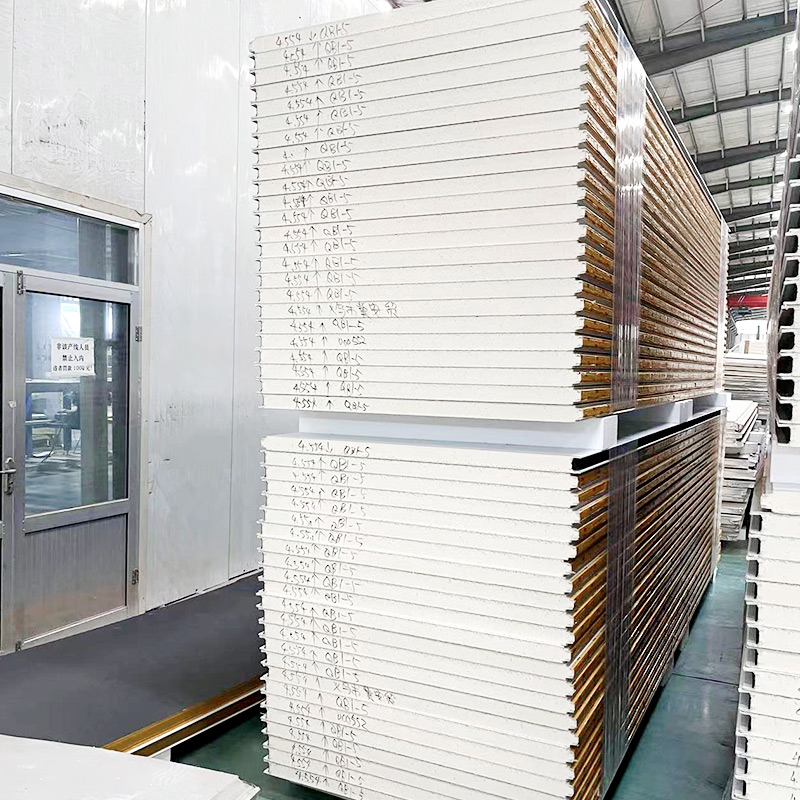
Choosing the right insulation is crucial for energy efficiency and safety in construction. Rockwool PU Sandwich Panels and PIR Sandwich Panels are popular options. In this post, you'll learn about their characteristics and applications, helping you decide which suits your needs best.
Characteristics of Rockwool Sandwich Panels
Thermal and Acoustic Insulation
Rockwool sandwich panels offer solid thermal insulation, though their thermal conductivity is higher than that of PIR panels. This means they require a thicker layer to achieve the same insulation value. However, they excel in acoustic insulation due to their fibrous structure. The dense, intertwined fibers trap sound waves effectively, reducing noise transmission. This makes rockwool panels especially suitable for environments where sound control is important, such as industrial buildings or auditoriums.
Fire Resistance
One of rockwool’s standout features is its excellent fire resistance. Made from volcanic rock and minerals, it is naturally non-combustible and can withstand very high temperatures without melting or releasing toxic fumes. This inherent fire resistance makes rockwool panels ideal for sectorization in buildings, helping to contain fires and protect structural integrity. Many building codes require or recommend rockwool in fire-rated walls and partitions, reinforcing its role as a reliable fire barrier.
Material Composition
Rockwool panels consist of a core made from spun mineral fibers derived from volcanic rocks like basalt. These fibers are bonded together using polyurethane-based adhesives, which also secure the core to the metal facing sheets. The metal sheets are typically coated with paint or lacquer that is also polyurethane-based, ensuring durability and resistance to environmental factors. The fibrous nature of rockwool not only contributes to its insulation and fire performance but also adds to its moisture resistance, although it can absorb water if not properly protected.
Note: Rockwool panels provide superior fire resistance and sound insulation, making them a preferred choice for safety-critical and noise-sensitive applications in construction.
Characteristics of PIR Sandwich Panels
Low Thermal Conductivity
PIR (Polyisocyanurate) sandwich panels stand out for their exceptionally low thermal conductivity. This means they provide superior insulation performance compared to rockwool panels of the same thickness. Thanks to their closed-cell foam structure, PIR panels trap heat efficiently, reducing energy loss in buildings. This makes them ideal for applications demanding high thermal efficiency, such as refrigerated warehouses, cold storage, and energy-efficient commercial buildings. Because less thickness is needed to achieve the same insulation value, PIR panels help save space without compromising insulation quality.
Lightweight and Strength
PIR sandwich panels are notably lightweight compared to rockwool panels. Their foam core results in a high strength-to-weight ratio, making handling, transportation, and installation easier and faster. The reduced weight also minimizes structural load on buildings, which can lower construction costs. Additionally, PIR panels offer excellent mechanical strength and rigidity, providing robust support for outer metal facings. This strength helps maintain panel integrity under wind loads and mechanical impacts, ensuring durability over time.
Fire Resistance and Stability
PIR panels exhibit good fire resistance, though their performance differs from rockwool’s inherent non-combustibility. The polyisocyanurate structure in PIR foam enhances thermal stability and fire resistance compared to standard polyurethane foams. PIR panels typically char and form a protective layer when exposed to fire, slowing flame spread and heat release. Many PIR panels meet fire safety standards required for commercial and industrial buildings. However, they do not achieve the same high-temperature resistance as rockwool panels, which remain stable at very high temperatures without melting.
Installation Process Comparison
Complexity of Rockwool Installation
Installing rockwool sandwich panels is generally more complex than PIR panels. Rockwool panels are heavier and bulkier due to their dense mineral fiber core. This weight increases the physical effort needed during handling and positioning. Installers often require more labor and time to fit panels securely.
Additionally, rockwool panels need careful surface preparation. The base surface must be clean and even to ensure good adhesion. Since rockwool fibers are breathable, the panels often require protective layers or membranes to prevent moisture ingress during and after installation. The adhesive used to bond the panels to the structure is typically polyurethane-based, requiring precise application.
Another factor increasing complexity is the need for mechanical fixing, such as plastic expansion bolts or anchors. These help secure the panels firmly, especially on vertical or sloped surfaces. Because rockwool panels have less compressive strength, installers must ensure even load distribution to avoid panel deformation or damage. This often involves additional mortar leveling or support frameworks, adding to installation time and costs.
Streamlined PIR Installation
PIR sandwich panels offer a much simpler installation process. Their lightweight foam core makes them easier to carry and position, reducing installer fatigue and speeding up work. PIR panels usually come with factory-applied facings, such as ceramic or metal sheets, which are chemically bonded to the core. This factory bonding eliminates the need for on-site adhesive application, saving time and reducing errors.
Installation mainly involves applying adhesive mortar directly onto the substrate, followed by pressing the PIR panels into place. In many cases, only a few mechanical anchors are needed to secure the panels, thanks to their high strength-to-weight ratio. This streamlined process minimizes material waste and reduces the number of installation steps.
The uniform thickness and rigidity of PIR panels also mean less need for surface leveling. They fit tightly together, creating a smooth, even facade. This reduces the risk of thermal bridging and improves overall insulation performance.
Labor Intensity and Costs
Because rockwool panels require more handling effort, surface preparation, and mechanical fixing, labor intensity is higher. Installers often need protective gear to guard against irritation from mineral fibers. These factors increase labor costs and can extend project timelines.
In contrast, PIR panels’ lighter weight and simpler installation reduce labor demands. Fewer workers can complete the job faster, lowering labor expenses. The reduced need for complex fixing and surface preparation also cuts associated costs.
Long-term maintenance costs differ, too. Rockwool’s tendency to absorb moisture can lead to panel detachment or damage over time, requiring repairs. PIR’s hydrophobic nature preserves adhesion and panel integrity, minimizing maintenance needs.
Cost Analysis: Rockwool vs. PIR
Material Costs
Rockwool panels generally cost less per square meter than PIR panels. This is due to the raw materials: volcanic rock and minerals are abundant and cheaper than the chemical components used in PIR foam. However, because rockwool has higher thermal conductivity, thicker panels are needed to achieve the same insulation level as thinner PIR panels. This can increase the total material volume and cost for projects requiring high thermal performance.
PIR panels, though pricier per unit area, offer better insulation per thickness unit. Their closed-cell foam core delivers superior thermal resistance, meaning less material thickness is needed. This can reduce the overall material cost in applications where space is limited or high insulation values are mandatory.
Labor Costs
Installing rockwool panels demands more labor and time. Their heavier weight and bulkiness require extra effort during handling and positioning. Workers often need protective gear to avoid irritation from mineral fibers, which adds to labor complexity. Surface preparation for rockwool is also more involved, including leveling, cleaning, and applying protective membranes to prevent moisture ingress.
In contrast, PIR panels are lighter and easier to handle. Their factory-bonded facings eliminate the need for on-site adhesive application, speeding up installation. Fewer mechanical fixings are required due to PIR’s high strength-to-weight ratio. This streamlined process reduces labor hours and the number of installers needed, lowering labor costs significantly.
Long-Term Maintenance Costs
Rockwool panels can absorb moisture if not adequately protected, increasing weight and risking detachment or damage over time. This can lead to costly repairs or replacements, especially in damp or exposed environments. Maintenance may involve reapplying protective coatings or replacing panels, which adds to lifecycle expenses.
PIR panels are hydrophobic due to their closed-cell foam structure, resisting water and vapor penetration. This characteristic preserves insulation performance and adhesion over time, reducing the risk of damage from moisture or freeze-thaw cycles. As a result, PIR panels typically require less maintenance and have a longer service life, translating to lower long-term costs.
Performance in Different Applications
Sectorization and Fire Safety
Rockwool panels are top performers in fire safety and sectorization. Their natural non-combustibility and ability to withstand extreme heat make them ideal for fire-rated walls and partitions. They help contain fires, protecting adjacent building areas and structural elements. Many fire codes require rockwool in critical sectorization zones, especially in industrial or commercial buildings.
PIR panels also offer fire resistance but behave differently under heat. They char and form a protective layer, slowing flame spread. While PIR meets many fire safety standards, it cannot endure the highest temperatures like rockwool. For applications where maximum fire resistance is crucial, rockwool remains the safer choice.
High Thermal Efficiency Applications
PIR panels excel in high thermal efficiency settings. Their low thermal conductivity means less thickness is needed to achieve excellent insulation. This is valuable in spaces where every inch counts, such as refrigerated warehouses or energy-efficient commercial buildings. PIR’s closed-cell foam traps heat effectively, cutting energy loss and lowering heating or cooling costs.
Rockwool provides good thermal insulation but requires thicker panels to match PIR’s performance. This can increase wall thickness and reduce usable space. However, rockwool’s added acoustic benefits can be a plus in environments where noise reduction is important.
Moisture Resistance and Durability
Moisture resistance is another key factor in panel performance. PIR’s closed-cell foam structure makes it hydrophobic, resisting water and vapor penetration. This helps maintain insulation quality and adhesion over time, especially in damp or freeze-thaw conditions. As a result, PIR panels tend to have longer service lives and lower maintenance needs.
Rockwool’s fibrous structure can absorb moisture if not properly protected. This can increase panel weight and risk detachment or damage. Protective membranes or coatings are essential to preserve rockwool’s durability, especially in humid or exposed locations.
Environmental Impact and Sustainability
Eco-Friendliness of Rockwool
Rockwool insulation originates from natural volcanic rock and minerals. This raw material base makes it a more eco-friendly option compared to synthetic foams. The manufacturing process recycles stone materials and uses less harmful chemicals. Additionally, rockwool is fully recyclable at the end of its life cycle, reducing landfill waste. Its durability means fewer replacements, which lowers environmental impact over time. However, producing rockwool requires high energy input due to melting rocks at very high temperatures, which contributes to its carbon footprint.
Manufacturing and Waste Reduction in PIR
PIR panels are made from chemical reactions involving isocyanates and polyols, creating a rigid foam core. The manufacturing process is highly controlled, minimizing waste and ensuring consistent product quality. Many PIR producers implement recycling programs for offcuts and defective panels to reduce landfill contributions. PIR’s lightweight nature lowers transportation emissions, as more panels fit per load. Despite being synthetic, PIR panels often have a longer lifespan and better thermal efficiency, which helps offset environmental costs over their service life.
Long-Term Energy Savings
Both rockwool and PIR panels contribute significantly to energy savings in buildings by reducing heating and cooling demands. PIR’s lower thermal conductivity means it can achieve required insulation levels at thinner thicknesses, saving space and materials. This efficiency translates into lower energy bills and reduced greenhouse gas emissions. Rockwool’s excellent acoustic and fire properties make it ideal for buildings where safety and noise control are priorities, indirectly supporting sustainability by enhancing occupant comfort and safety. Choosing the right insulation based on building needs can optimize energy use and environmental benefits.
Conclusion: Choosing the Right Insulation
Rockwool and PIR panels each offer distinct advantages. Rockwool excels in fire resistance and sound insulation, making it ideal for safety-critical environments. PIR panels provide superior thermal efficiency and moisture resistance, perfect for energy-efficient projects. For projects prioritizing fire safety and acoustic benefits, rockwool is recommended. Conversely, PIR is suitable for quick installations and thermal efficiency. Beijing Prefab Steel Structure Co., Ltd. offers both options, ensuring high-quality, reliable solutions for diverse construction needs.
FAQ
Q: What are the main differences between Rockwool PU Sandwich Panel and PIR Sandwich Panel?
A: Rockwool PU Sandwich Panels excel in fire resistance and sound insulation, while PIR Sandwich Panels offer superior thermal efficiency and are lighter, making installation easier.
Q: How do Rockwool PU Sandwich Panels and PIR Sandwich Panels compare in terms of cost?
A: Rockwool panels generally cost less per square meter but require more labor for installation. PIR panels, though pricier, reduce labor costs due to their simpler installation process.
Q: Why choose Rockwool PU Sandwich Panel over PIR Sandwich Panel for fire safety?
A: Rockwool PU Sandwich Panels are naturally non-combustible and withstand extreme heat, making them ideal for fire-rated applications, unlike PIR panels.
Q: How does moisture affect Rockwool PU Sandwich Panel and PIR Sandwich Panel?
A: Rockwool panels can absorb moisture if unprotected, risking damage. PIR panels are hydrophobic, resisting water and maintaining insulation quality over time.


