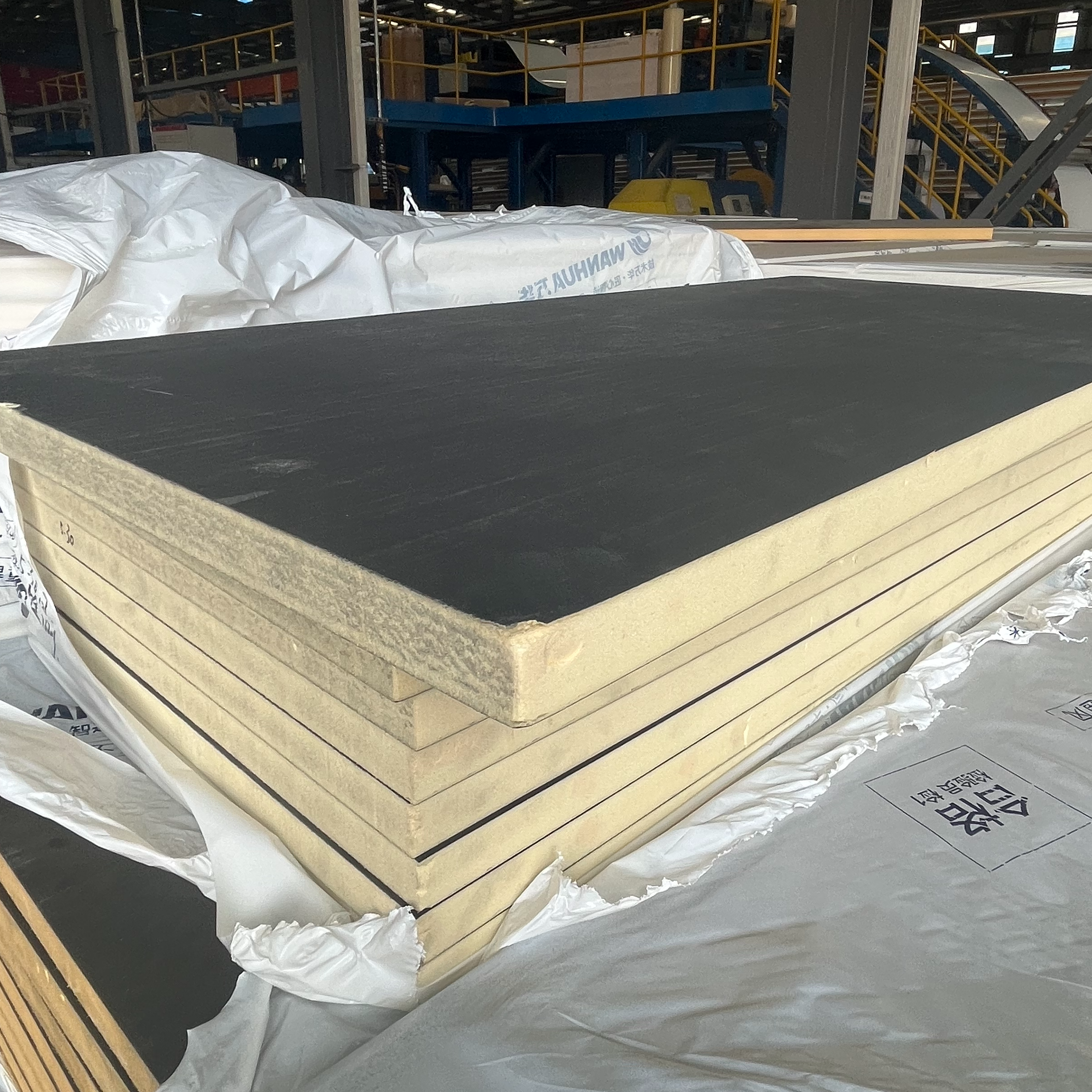
Project managers, architects, and facility owners constantly balance upfront material costs against long-term operational efficiency. Building safety compliance plays an equally critical role in construction planning. Choosing the wrong insulated panel can lead to severe energy leaks. It might also cause unseen structural degradation or introduce catastrophic fire hazards. EPS (Expanded Polystyrene) panels offer compelling cost savings. They also provide lightweight handling for quick, modular installations. Conversely, PU (Polyurethane) panels claim superior thermal performance. They boast enhanced structural integrity under demanding environmental conditions. This guide breaks down the exact engineering realities separating these two materials. We explore verifiable performance metrics like R-values, load bearing, and fire behavior. You will discover practical strategies for commercial procurement. By understanding these materials, you can make a defensible, data-driven decision for your next project.
Key Takeaways
Thermal Efficiency: PU sandwich panels achieve the same insulation value as EPS at roughly half the thickness due to a lower thermal conductivity (0.020–0.028 W/m·K vs. 0.035–0.045 W/m·K).
Fire Behavior: EPS is a thermoplastic that melts and drips under extreme heat; PU is a thermosetting polymer that forms a protective char layer, offering superior structural stability during a fire.
Cost vs. Lifespan: EPS requires a lower initial investment ($6.50–$13.00/m²), but PU ($10.50–$35.00/m²) delivers higher energy ROI and a longer functional lifespan (50–60+ years vs. 30–50 years for EPS).
Moisture Resistance: PU’s closed-cell structure keeps water absorption below 3%, making it the dominant choice for cold storage and humid environments.
Material Science: Polystyrene vs. Polyurethane Cores
Understanding panel performance starts at the molecular level. The core material dictates how a building envelope handles heat, moisture, and physical stress.
EPS (Expanded Polystyrene) Composition
EPS consists of roughly 95 to 98 percent trapped air. Manufacturers expand polystyrene resin into a cellular, honeycomb-like structure. This open-cell configuration creates a highly lightweight material. Construction crews easily cut and shape EPS directly on the job site. However, the open cellular structure carries inherent structural risks. It remains highly susceptible to moisture ingress. If equipment scratches or punctures the exterior steel facing, water easily enters the core. Trapped water destroys the insulation value almost immediately.
PU (Polyurethane) Composition
PU forms through a rapid chemical reaction between polyisocyanates and polyols. This manufacturing process creates a dense, rigid foam. Unlike EPS, polyurethane features a strict closed-cell structure. The closed cells trap insulating gases tightly inside the matrix.
E-E-A-T Reality Check: The rigid closed-cell nature of PU provides exceptional moisture resistance. Water absorption typically stays below 3 percent. This characteristic protects the panel against long-term degradation from condensation. In commercial cold rooms, condensation acts as a silent destroyer. Moisture easily freezes, expands, and tears open inferior panels. PU resists this freeze-thaw cycle. This resistance makes it critical for maintaining long-term structural integrity in challenging environments.
Performance Showdown: Thermal Efficiency, Load, and Fire Safety
Engineering specifications ultimately determine building viability. We must compare these insulated panels across three critical performance metrics to understand their true value.
Insulation and Thermal Performance (U-Value / R-Value)
PU provides the lowest thermal conductivity in the commercial market. It achieves unmatched U-values. To hit a specific insulation target, a PU panel requires significantly less thickness than an EPS equivalent. Thinner walls save valuable usable footprint. This space saving generates immediate ROI in cold rooms and logistics warehouses where every square meter counts.
Furthermore, PU maintains remarkable thermal stability across extreme temperature ranges. It performs flawlessly from -180°C up to 250°C. EPS struggles under intense heat. It can experience secondary foaming or severe deformation at temperatures above 70°C. Dark-colored roofs frequently exceed this temperature threshold during peak summer months.
Fire Safety Mechanics (Thermoplastic vs. Thermosetting)
Fire behavior highlights the starkest contrast between these two polymers.
EPS (Thermoplastic): Polystyrene melts between 100°C and 300°C. Upon exposure to fire, it softens and shrinks rapidly. The melting plastic can produce burning droplets. These droplets potentially spread flames to lower building levels if lacking heavy flame retardant treatments.
PU (Thermosetting): Polyurethane does not melt. Under intense heat, PU carbonizes and forms a hard char. This charred barrier restricts oxygen flow. It significantly slows down fire penetration through the wall assembly.
Alternative Solution: Certain strict safety codes demand A1 non-combustible ratings. Safety compliance officers often specify hybrid systems. You might integrate a Rockwool PU Sandwhich Panel into your facility design. This panel features a solid rock wool core framed by PU edge-sealing. It delivers unmatched fire resistance alongside perfect joint weatherproofing.
Load Bearing and Compressive Strength
Structural demands vary drastically across building envelopes. PU offers exceptionally high shear strength, ranging from 120 to 450 kPa. It also boasts massive compressive strength. These metrics make it perfectly suitable for load-bearing roof applications. It easily handles high wind uplift or heavy snow loads. EPS lacks this structural rigidity. Engineers generally restrict EPS to non-load-bearing wall cladding or internal dry partitions.
Performance Metric | EPS Core | PU Core |
Thermal Conductivity | 0.035–0.045 W/m·K | 0.020–0.028 W/m·K |
Temperature Stability | Up to 70°C | -180°C to 250°C |
Fire Behavior | Thermoplastic (Melts & Drips) | Thermosetting (Chars & Protects) |
Moisture Absorption | High (Open-cell structure) | < 3% (Closed-cell structure) |
Shear Strength | Low (Non-load bearing) | 120–450 kPa (Load-bearing) |
Project Application Mapping
Selecting the right core material depends entirely on your specific project constraints. Misapplying a panel increases risks and wastes valuable capital.
When to Specify EPS Panels
EPS shines in cost-driven, low-risk environments. You should specify EPS for temporary construction setups. It works perfectly for modular worker housing. Budget-constrained agricultural buildings frequently rely on it. Choose EPS whenever initial capital expenditure acts as the primary project constraint. It also serves excellently for internal partitions inside dry, temperature-stable facilities.
When to Specify PU Sandwich Panels
Heavy-duty commercial applications demand polyurethane. You must specify PU sandwich panels for cold chain logistics and food processing. Walk-in freezers and refrigerated trucks require them entirely. In these environments, perfect condensation control remains non-negotiable. Maximum thermal retention directly impacts daily profitability.
Commercial roofs also require PU. Outdoor applications demand high UV resistance. They need robust weatherproofing and superior structural durability to survive decades of exposure. Finally, compliance-heavy builds mandate PU. Hospitals, cleanrooms, and high-value manufacturing facilities require strict hygiene protocols. They demand B1 fire ratings and long-term surface durability. PU easily meets these stringent, heavily audited requirements.
Budgeting: CapEx and Operational Expenditures
Financial planning requires looking beyond the initial material invoice. Procurement teams must balance immediate costs against long-term operational performance.
Initial Procurement Costs (CapEx)
EPS remains the clear cost-leader in the construction industry. It generally prices between $6.50 to $13.00 per square meter. This low entry price makes it highly attractive for massive warehouse partitions where budgets stay tight.
PU requires a noticeably higher initial investment. Prices typically range from $10.50 to $35.00 per square meter. Multiple variables influence this final cost. Your chosen panel thickness alters the price. The selected exterior steel gauge shifts the budget. Specialized fire retardant additives also command a premium.
Operational Expenditures (OpEx) and ROI
You rapidly offset the upfront PU premium in climate-controlled buildings. Superior thermal resistance fundamentally changes daily energy consumption. A highly insulated envelope reduces daily HVAC runtime. It severely drops refrigeration energy loads. Lower power bills accumulate quickly over a facility's active lifespan.
Lifespan Replacement
Panel longevity dramatically affects your annualized building costs. EPS panels typically provide 30 to 50 years of usable service. However, unnoticed moisture ingress can shorten this window. PU panels provide a largely maintenance-free exterior. They easily exceed 50 to 60 years of active service. More importantly, PU maintains its thermal performance without degrading over those decades. This sustained performance drives down facility operating costs permanently.
Installation Realities and Manufacturer Sourcing
Theoretical performance means nothing without proper site execution. Panel handling and supplier selection dictate your final building quality.
Handling and Installation Risks
EPS panels weigh significantly less. Construction crews easily execute manual lifting on-site. However, this material brings fragility. Workers must handle EPS carefully to avoid edge damage before installation. Crushing a joint edge ruins the weather seal immediately.
PU panels weigh much more. This weight complicates manual handling tasks. Contractors frequently require mechanical lifting aids or vacuum lifters. Despite the weight, panel rigidity actually speeds up final alignment. Fastening proceeds efficiently. Teams typically execute a standard six-step installation involving Z-locks or concealed joints.
Standard 6-Step Installation Sequence
Verify delivery manifests against required accessories and hardware.
Unload panels carefully using specialized wide-strap lifting equipment.
Assemble the secondary framing, roof purlins, and wall columns.
Peel the protective film slightly away from the joining edges.
Align panels precisely using Z-lock joints and secure them using self-tapping fasteners.
Seal all overlapping joints and install the final exterior weather flashing.
Evaluating a Manufacturer
Never select a supply partner based on per-square-meter price alone. Poor quality control destroys thermal performance. Look for a trusted sandwich panels manufacturer capable of supporting complex commercial builds.
Essential Vetting Criteria
Demand independent laboratory certifications. Ensure they hold verifiable ASTM E84 or EN 13501 testing reports for fire safety.
Request precise U-value testing data. Validate their insulation claims against your local building codes.
Verify their logistical capability. Ask if they can deliver standard maximum lengths up to 12 meters. Maximizing panel length minimizes joint seams, which effectively prevents thermal bridging.
Conclusion
Evaluating commercial insulation requires balancing safety, energy usage, and structural needs.
Final Verdict on EPS: EPS remains the pragmatic choice for budget-sensitive construction. It fits perfectly in low-risk or temporary projects where extreme thermal efficiency falls secondary.
Final Verdict on PU: PU stands as the definitive engineering standard. Use it for permanent commercial, industrial, and cold-storage projects. Its long-term energy savings, superior moisture resistance, and structural integrity far outweigh the initial material cost.
Actionable Next Step: Review your local building code requirements regarding fire safety and combustibility.
Actionable Next Step: Calculate your projected 10-year HVAC energy costs before sending an RFQ to panel suppliers.
FAQ
Q: Which sandwich panel is best for cold rooms or freezers?
A: PU sandwich panels serve as the industry standard for cold rooms. They offer superior thermal insulation and extremely low U-values. Their closed-cell structure completely prevents moisture buildup. It eliminates the risk of internal ice expansion, which easily destroys inferior panel systems.
Q: What thickness of PU sandwich panel should I choose?
A: Thickness relies entirely on your required thermal resistance. Commercial applications generally utilize 50mm to 100mm panels for standard external walls. Extreme cold storage facilities demand thicker insulation. They typically use 150mm to 200mm panels to maintain deep-freeze temperatures efficiently.
Q: What is the maximum length of a manufactured sandwich panel?
A: Production lines can often run continuously. However, practical limits depend entirely on transportation constraints and safe site handling. Most manufacturers cap delivery lengths at approximately 12 meters. This measurement matches the exact length of a standard commercial shipping container.
Q: Are sandwich panels suitable for both roofs and walls?
A: Yes. The core materials remain the same across structural applications. However, roof panels feature specific profiles. They use deeper external ribs and specialized overlapping joints. These designs effectively manage fast water runoff and support higher structural load-bearing requirements like snow accumulation.


