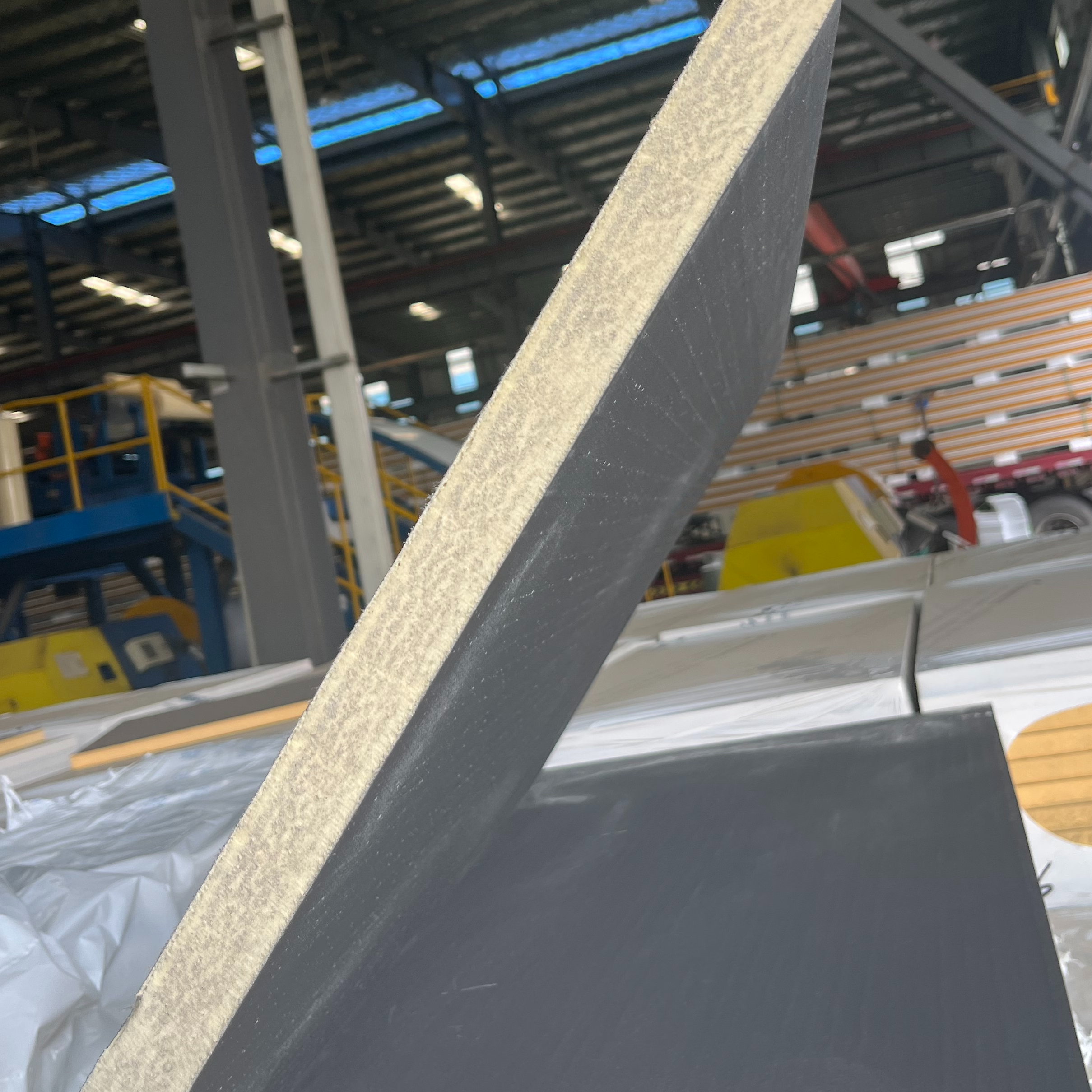
Modern construction demands materials bridging thermal efficiency, structural integrity, and rapid deployment. Builders face immense pressure to erect facilities quickly without sacrificing building envelope performance. However, selecting the wrong building envelope materials compromises HVAC loads, fire safety, and long-term maintenance budgets. Inadequate insulation can lead to devastating thermal bridging, while weak facings invite structural failures over time. We introduce PU sandwich panels not as a miracle material, but as an engineered composite system. They are carefully designed to solve specific thermal and structural challenges across commercial, industrial, and cold-storage construction. This guide breaks down the physical mechanics, technical thresholds, comparative safety profiles, and strict procurement criteria you must understand before making a purchase.
Key Takeaways
PU sandwich panels operate on an "I-beam" structural principle, combining lightweight thermal cores with high-strength facings.
Standard PU panels deliver exceptional thermal conductivity (0.022–0.033 W/m·K) but require strict evaluation regarding fire behavior (B2/B3 vs. PIR/Rockwool alternatives).
Application dictates the fastening system: concealed tongue-and-groove for aesthetic facades, and overlapping self-drilling systems for leak-proof roofing.
Verifying a sandwich panels manufacturer’s production process (e.g., core grooving, double-belt temperature control) is critical to preventing long-term delamination.
The Engineering Core: How PU Sandwich Panels Work
You can best understand these composite panels through the "I-beam" analogy. Traditional steel I-beams use heavy top and bottom flanges to handle bending, joined by a central web to handle shear stress. PU panels apply this exact structural mechanic using different materials. The rigid exterior skins act as the flanges. They successfully resist in-plane loads and lateral bending forces from wind or impacts. Meanwhile, the lightweight polyurethane foam core acts as the web. It absorbs and resists shear loads across the panel's surface.
Manufacturing these panels requires precision engineering rather than simple assembly. Factories employ a specialized liquid injection process to create them. Liquid polyurethane foam components blend and inject directly between two continuous facings. These facings typically consist of galvanized steel, aluminum, or fiberglass reinforced plastic (FRP). The liquid expands rapidly, filling every microscopic void before curing. It eventually hardens to form a unified, high-strength block that refuses to separate under normal stress.
This composite approach delivers massive structural efficiency. Because the core and skins function as one cohesive unit, the panels support their own weight effectively. You can achieve unsupported spans ranging from 3 to 11 meters. The exact span depends on the panel thickness, local wind loads, and facing materials. By bridging these long distances, builders drastically reduce the required internal steel framework. This streamlines your construction timeline and significantly lowers baseline building costs.
Technical Specifications & Performance Baseline
You need objective data to set reliable evaluation criteria for procurement. Do not rely on generic marketing claims when selecting building materials. Evaluate the actual thermal, dimensional, and acoustic performance of the panels.
The industry-standard thermal conductivity for high-quality polyurethane sits between 0.022 and 0.033 W/m·K. This incredible thermal resistance allows panels to remain surprisingly thin while blocking massive temperature transfers. For example, a 160mm panel can easily achieve a U-value as low as 0.15 W/m²K. This performance level easily meets the strict requirements of modern passive housing and advanced cold storage.
Performance Metric | Standard Measurement | Engineering Context |
Thermal Conductivity | 0.022 – 0.033 W/m·K | Outperforms EPS and mineral wool at equivalent thicknesses. |
Standard Width | 1000mm to 1150mm | Optimized for shipping containers and rapid wall assembly. |
Custom Length | 3 to 16 meters | Limited primarily by transportation logistics, not manufacturing. |
Core Density | 28 – 50 kg/m³ | Higher density increases structural shear strength but adds weight. |
Acoustic Attenuation | ~25dB reduction | Sufficient for general industrial noise buffering. |
You also need to account for internal load-bearing requirements. Standard PU foam offers excellent thermal resistance but lacks the compressive strength to hold heavy point loads. If you hang heavy internal wiring, heavy machinery, or complex pipe systems, standard foam will crush. Advanced engineering solves this through embedded structures. Factories can pre-embed aluminum tubes, steel pipes, or I-shaped brackets directly into thick foam (over 8cm) during the injection phase. These hardpoints allow you to mount heavy equipment safely without compromising the thermal envelope.
PU vs. PIR vs. Rockwool PU Sandwhich Panel: The Safety & Application Trade-off
Fire safety remains the most critical conversation when discussing insulated metal panels. We must address this objectively. Standard PU (PUR) panels offer high thermal efficiency, but they present specific fire risks. Standard PUR formulations fall into the B2 (combustible) or B3 (flammable) fire rating categories. They are best suited for highly controlled thermal environments where engineers have actively mitigated external fire risks.
If your project demands higher fire safety, Polyisocyanurate (PIR) offers a direct chemical upgrade. PIR manufacturing requires different polyol blends and a much higher concentration of MDI. The chemical reaction demands higher production temperatures to cure properly. This upgraded matrix achieves a B1 (hard to burn) status. PIR significantly reduces smoke generation and naturally stops flame spread. It accomplishes this without relying on extra, potentially harmful flame retardants.
For ultimate fire protection, consider the Rockwool PU Sandwhich Panel as a hybrid alternative. This design utilizes a dense mineral wool core. Mineral wool provides unmatched, non-combustible fire resistance and delivers superior acoustic insulation (often exceeding 30dB reduction). However, raw mineral wool absorbs water easily. To solve this, manufacturers seal the panel edges with high-density PU to prevent moisture ingress. Note the engineering trade-off here: Rockwool hybrid panels carry much heavier weight. They also require slightly thicker profiles to match the baseline thermal performance of pure PU.
Comparison Summary Chart
Core Material | Fire Rating | Thermal Efficiency | Best Application |
Standard PU (PUR) | B2 / B3 (Combustible) | Excellent | Controlled agricultural / standard industrial |
PIR | B1 (Hard to burn) | Excellent | Commercial facilities / strict code zones |
Rockwool Hybrid | A1 / A2 (Non-combustible) | Moderate (Requires extra thickness) | High-risk fire zones / acoustic rooms |
Application-Specific Design and Fastening Systems
You cannot use a universal fastening approach. The application environment dictates the physical design of the panel edges. Using the wrong fastening system guarantees implementation failures, thermal bridging, and severe water leaks.
Architectural Facades & Walls
Wall systems prioritize aesthetics, airtightness, and hygiene. We utilize "hidden contact" or concealed fastening designs for architectural facades. The panels feature complex tongue-and-groove profile locks. As you push the panels together, these interlocking edges hide the mounting screws entirely from weather exposure. This prevents thermal loss and blocks humidity transfer. It also creates a smooth, continuous surface. This seamless finish allows for high-pressure washing, which remains a crucial maintenance requirement for medical cleanrooms and food processing plants.
Roofing Systems
Roof panels face brutal weather conditions and require a completely different approach. You cannot use hidden fasteners on a flat or low-pitch roof. Instead, roof panels rely on distinct anti-capillary overlapping joints. One panel features an extended metal lip that securely overlaps the adjacent panel. You must secure these panels using exposed self-drilling fasteners equipped with EPDM sealing washers. When driven into the high ridges of the panel, the EPDM washer compresses, guaranteeing safe snow and rain runoff without leakage.
Cold Storage Operations
Cold storage facilities push materials to their absolute limits. Freezers operating at deep negative temperatures require extreme panel thickness, sometimes up to 200mm. Standard tongue-and-groove joints will fail here due to ice expansion. Cold storage requires specialized vapor barriers and hermetic joint sealing. Installers must apply non-freezing butyl sealants inside the panel joints before pushing them together. This stops warm, moist outside air from penetrating the joint and freezing, which would eventually blow the panels apart.
Implementation Risks: Installation and Long-Term Durability
Even the highest-grade materials fail if improperly manufactured or clumsily installed. Poorly manufactured panels suffer from severe delamination risks. Delamination occurs when the metal skin physically detaches from the internal foam core, causing ugly bubbling and immediate structural failure. Advanced manufacturers combat this by using core "grooving" techniques. They cut micro-grooves into the core surface to ensure the polyurethane resin glue distributes perfectly across every square inch, permanently preventing bubbling.
Installation realities also dictate the lifespan of your building. You must adhere to strict deployment protocols.
Non-Negotiables of Deployment
Pre-installation Alignment: You must verify the absolute vertical and horizontal plumb of all wall purlins before lifting a single panel. A misaligned frame puts twisting stress on the rigid panels, forcing the joints to warp and leak.
Base-Level Sealing: Installers must secure bottom water-baffle plates using self-tapping screws. This prevents ground-level water from wicking up into the exposed bottom edge of the foam core.
Thermal Movement Gaps: Dark-colored metal panels expand significantly under direct sunlight. You must leave calculated micro-gaps at structural junctions to accommodate thermal expansion, or the metal facings will buckle.
Finally, always ensure regulatory compliance. Advise your procurement team to verify EN14509:2013 certifications (the European standard for self-supporting double skin metal faced insulating panels) or equivalent local EPAQ documentation. This ensures an independent auditor has verified the manufacturer's load-bearing and fire-behavior claims.
How to Evaluate a Sandwich Panels Manufacturer
You need a reliable shortlisting framework to separate modern engineering partners from outdated factories. Finding a proper sandwich panels manufacturer requires looking past simple price sheets and examining their factory floor capabilities.
First, look closely at their production line capability. Top-tier manufacturers utilize continuous double-belt machinery. This equipment maintains steady pressure and precise temperature control during the curing phase. True PIR foam requires a continuous heating environment of at least 60℃ to cross-link properly. Basic PU lines only maintain 40℃. If a supplier claims to sell PIR but operates a 40℃ line, you will receive an inferior, unsafe product.
Second, verify their adhesion technology. Ask if the supplier utilizes a "Corona system." This electrical discharge system treats the bare metal or FRP surfaces right before injection. It alters the surface tension of the metal, radically improving the chemical bond between the skin and the expanding foam. Panels produced without Corona treatment face a significantly higher risk of delamination.
Third, assess customization versus commoditization. A qualified partner acts as an engineering consultant. They should offer varying skin thicknesses to match specific wind loads. They must provide specialized chemical-resistant laminates for agricultural or medical facilities that use harsh cleaning agents. They should also easily handle structural embeds. Avoid factories that only push off-the-shelf commoditized sizes with no room for project-specific customization.
Conclusion
PU sandwich panels provide highly efficient thermal and structural solutions for modern construction. However, they only deliver their promised value when precisely matched to the correct fire-safety codes and environmental applications. You cannot treat these engineered systems as generic commodities. From the structural I-beam mechanics to the specific fastening joints on roofs versus walls, every detail impacts the lifespan of your building.
As a next step, actively audit your project's required U-values. Assess your local fire code requirements to make an informed decision between standard PUR, advanced PIR, or Rockwool hybrid cores. Always request detailed technical data sheets (TDS) and independent certification documents from vetted suppliers before requesting a final quote. Taking these steps ensures a safe, efficient, and long-lasting building envelope.
FAQ
Q: What is the lifespan of a PU sandwich panel?
A: A high-quality PU sandwich panel typically lasts 25+ years. Lifespan depends heavily on the weather resistance of the outer skin and the stable thermal retention of the closed-cell core. Regular maintenance of the joint seals and prompt repair of outer skin scratches will significantly extend panel longevity.
Q: Can PU panels be cut on-site?
A: Yes, you can cut them on-site, but you must use specific cold-cutting tools. We recommend circular saws with fine-toothed blades. Avoid angle grinders or abrasive blades. Hot-cutting tools generate sparks that can burn the inner core and destroy the metal skin's protective anti-corrosion coating.
Q: Why is my sandwich panel blistering?
A: Blistering stems from two main causes. First, extreme thermal expansion of dark-colored metal skins under direct sunlight can warp the metal. Second, chemical delamination occurs due to poor factory gluing or lack of core grooving. If the factory applied the adhesive unevenly, the skin detaches and bubbles.


