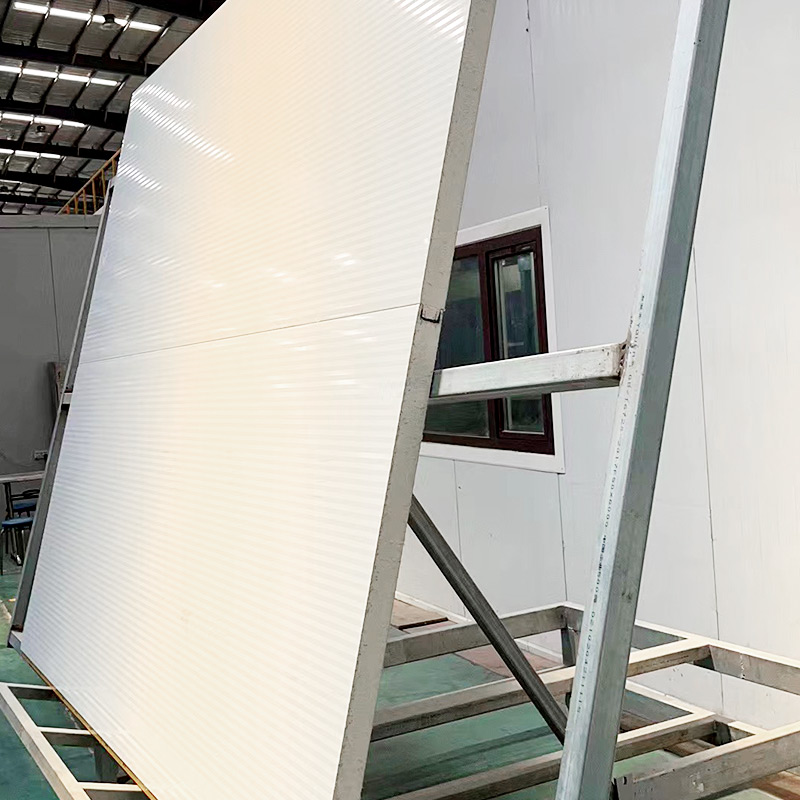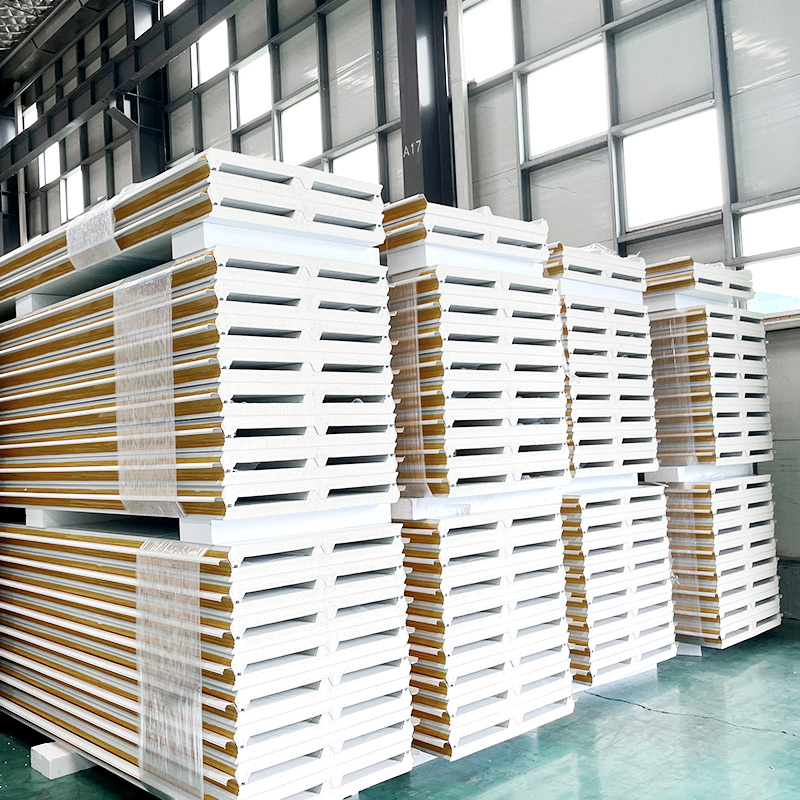
Are you wondering which insulation material is best for your project? PUR and PIR sandwich panels are popular choices. Choosing the right insulation is crucial for energy efficiency and safety. In this post, you'll learn about PUR and PIR panels' composition, performance, and suitability for various applications.
Understanding PUR and PIR Composition
PUR (Polyurethane) and PIR (Polyisocyanurate) sandwich panels share a close chemical relationship but differ in their molecular structures, influencing their performance in insulation applications.
Chemical Composition of PUR
PUR foam forms when two main components react: a polyol and an isocyanate. The hydroxyl (OH) groups in the polyol balance the isocyanate (NCO) groups, creating urethane linkages. This reaction produces a rigid, closed-cell foam with strong thermal insulation properties. PUR’s structure is relatively straightforward, resulting in good flexibility and excellent sealing capabilities, making it ideal for filling irregular spaces in construction.
Chemical Composition of PIR
PIR foam also starts with polyol and isocyanate but undergoes an additional chemical step. The isocyanate components partially trimerize, forming isocyanurate rings. This complex polymeric structure increases the foam’s thermal stability and fire resistance. Excess isocyanate still reacts with polyol to form urethane linkages, but the dominant isocyanurate rings give PIR a tougher, more heat-resistant core.
How Composition Affects Performance
The difference in chemical makeup leads to distinct performance traits:
Thermal Stability: PIR’s isocyanurate rings provide higher resistance to heat degradation, making it suitable for environments exposed to higher temperatures or fire risk.
Fire Resistance: PIR foam resists flames better and emits less smoke compared to PUR, which can melt and drip when exposed to fire.
Flexibility: PUR’s simpler urethane structure offers more flexibility, allowing it to conform to complex shapes better than PIR.
Durability: PIR’s chemical structure enhances long-term thermal stability and mechanical strength, while PUR maintains durability but with slightly less fire resilience.
In summary, both PUR and PIR begin with similar base chemicals but diverge in their polymer structures, affecting their application suitability. PUR excels in flexibility and moisture resistance, while PIR leads in fire safety and thermal stability.

Insulation Value and Thermal Conductivity
When comparing PUR and PIR sandwich panels, their insulation value and thermal conductivity play a crucial role in determining which is best for your project. These factors directly impact energy efficiency and comfort inside buildings.
R-Value Comparison
The R-value measures how well an insulation material resists heat flow. The higher the R-value, the better the insulation. PIR panels generally have a higher R-value than PUR panels. PIR typically offers around R-7 to R-7.2 per inch, while PUR ranges from about R-5 to R-7.1 per inch. This means PIR provides better thermal resistance per inch of thickness. For projects where space is limited but high insulation is vital, PIR panels can deliver superior performance without increasing thickness.
U-Value and K-Value Insights
The U-value indicates how much heat passes through a material, with lower values meaning better insulation. Since U-value is the inverse of R-value, PIR panels usually have lower U-values than PUR. This translates to less heat loss through walls or roofs insulated with PIR.
The K-value, or thermal conductivity, measures how easily heat moves through a material. Lower K-values show better insulating properties. PIR foam typically has a K-value between 0.022 and 0.027 W/mK, slightly better than PUR’s 0.025 to 0.035 W/mK range. This difference, while small, means PIR panels reduce heat transfer more effectively.
Impact on Energy Efficiency
Both PUR and PIR panels help reduce heating and cooling needs by minimizing heat transfer. However, PIR’s higher R-value and lower thermal conductivity make it more energy-efficient overall. Buildings insulated with PIR can maintain stable temperatures with less energy use, lowering utility bills and carbon emissions. For example, a commercial building using PIR panels might save more on HVAC costs over time compared to one with PUR panels of similar thickness.
That said, PUR still offers excellent insulation and is often favored for residential projects where flexibility and cost are priorities. Its ability to fill irregular spaces and form airtight seals enhances its effectiveness despite slightly lower R-values.
Fire Resistance and Safety
When it comes to fire performance, PUR (Polyurethane) and PIR (Polyisocyanurate) sandwich panels show notable differences due to their chemical structures.
Fire Performance of PUR
PUR foam has good insulation properties but limited fire resistance. When exposed to flames, PUR tends to melt and can drip, which may accelerate fire spread. It produces more smoke and toxic gases compared to PIR. Because of this, PUR panels are generally classified as combustible materials, often meeting fire ratings such as Class B2 (normal flammability) or lower, depending on additives and treatments. While some flame retardants can improve PUR’s fire behavior, it remains less suitable for applications with strict fire safety regulations.
Fire Performance of PIR
PIR foam is chemically designed for superior fire resistance. Its isocyanurate rings create a thermally stable network that resists high temperatures and slows combustion. PIR panels do not melt or drip when exposed to fire, reducing flame spread and smoke generation. This makes PIR panels compliant with higher fire safety standards, such as Class 1 fire ratings and FM approvals for roofing and insulated steel decks. PIR’s enhanced fire performance makes it a preferred choice in commercial, industrial, and public buildings where fire safety is critical.
Applications Requiring High Fire Safety
Buildings like schools, hospitals, warehouses, and industrial facilities often require insulation materials with high fire resistance. PIR panels fit well in these environments due to their ability to withstand fire exposure without compromising structural integrity or releasing harmful smoke. They are commonly used in insulated metal panels for walls and roofs where fire codes are stringent.
In contrast, PUR panels are better suited for residential or low-risk applications where fire safety regulations are less demanding. Their flexibility and cost-effectiveness make them practical for such uses, but designers should consider additional fire protection measures if using PUR in higher-risk settings.
Water and Moisture Resistance
When choosing between PUR and PIR sandwich panels, understanding their water and moisture resistance is key, especially for projects in humid or wet environments.
Water Resistance of PUR
PUR (Polyurethane) foam has a closed-cell structure that makes it highly water-resistant. This means it does not absorb water or allow it to pass through easily. Its low vapor permeability and minimal capillary absorption help prevent moisture from penetrating walls or roofs insulated with PUR panels. This feature is especially valuable in flood-prone or rainy areas, where water damage can be a concern. Additionally, PUR panels are bonded tightly between metal facings, which are often coated with anti-corrosive paints, enhancing their ability to keep water out and maintain structural integrity.
Moisture Resistance of PIR
PIR (Polyisocyanurate) panels also have excellent moisture resistance. Their foam core is hydrophobic, meaning it repels water rather than absorbing it. PIR panels are typically sealed with high-strength steel sheets or aluminum facings, which provide an extra barrier against moisture infiltration. This makes PIR particularly suitable for buildings exposed to high humidity, such as cold storage facilities or industrial environments. The closed-cell nature of PIR foam also helps prevent mold, mildew, and microbial growth, protecting the insulation’s thermal performance over time.
Applications in Humid Environments
Both PUR and PIR are excellent choices for use in humid climates or environments where moisture control is critical. For example:
PUR panels are often preferred for residential buildings or renovations where water resistance and flexibility are important. Their ability to form airtight seals in irregular cavities helps prevent moisture buildup inside walls.
PIR panels are favored in commercial or industrial settings where moisture exposure is constant or severe. Their superior moisture barrier properties and durability make them ideal for cold rooms, warehouses, and facilities with strict hygiene requirements.
While both materials resist water well, PIR’s enhanced sealing and hydrophobic properties often give it an edge in long-term moisture management, especially in demanding conditions.
Durability and Longevity
When choosing between PUR and PIR sandwich panels, understanding their expected lifespan and durability factors is crucial for long-term building performance.
Expected Lifespan of PUR Panels
PUR (Polyurethane) panels are known for their robust durability. Thanks to their closed-cell foam structure, they resist moisture, mold, and microbial growth effectively. This resistance helps PUR panels maintain thermal performance over decades. Typically, PUR panels can last 50 years or more under normal conditions. Their cellular structure also offers good dimensional stability, enabling them to withstand environmental stresses like temperature fluctuations and humidity. However, PUR may be more vulnerable to fire damage compared to PIR, which can affect its longevity in high-risk environments.
Expected Lifespan of PIR Panels
PIR (Polyisocyanurate) panels also offer impressive longevity, usually around 20 years or more. Their chemical structure provides enhanced thermal stability and mechanical strength, helping them resist rot and decay. PIR’s resistance to heat and fire contributes to maintaining integrity over time, especially in commercial and industrial settings. While the lifespan may seem shorter than PUR, PIR panels often deliver consistent insulation performance throughout their service life, especially in demanding conditions involving fire safety or high temperatures.
Factors Affecting Durability
Several elements influence the durability and lifespan of both PUR and PIR panels:
Environmental Exposure: Panels exposed to extreme weather, UV radiation, or moisture may degrade faster if protective facings or coatings are compromised.
Installation Quality: Proper installation ensures airtight seals and prevents water ingress, which can prolong panel life.
Mechanical Stress: Panels in high-traffic or load-bearing areas require additional strength; PIR’s tougher structure often performs better here.
Maintenance: Regular inspections and timely repairs help avoid damage from corrosion or physical impacts.
Fire Exposure: PIR’s superior fire resistance reduces damage risk, whereas PUR may suffer structural weakening if exposed to flames.
Choosing the right panel depends on the specific application and environment. For residential buildings where long lifespan and moisture resistance are priorities, PUR panels provide excellent value. For commercial or industrial projects demanding fire safety and mechanical strength, PIR panels offer durability aligned with those needs.
Cost and Budget Considerations
When deciding between PUR and PIR sandwich panels, cost plays a major role. Understanding price differences and long-term savings helps you pick the best option for your project budget.
Price Comparison Between PUR and PIR
PUR panels generally come at a lower upfront cost than PIR panels. This is because PUR’s manufacturing process is simpler and uses fewer raw materials. PIR involves more complex chemical steps and additives, which raise production expenses. For example, PUR panels might cost 10-30% less than PIR panels of the same thickness and size. This makes PUR attractive for projects that prioritize initial budget constraints, such as residential buildings or renovations.
Long-Term Cost Efficiency
Though PIR panels cost more initially, they often deliver better long-term value. PIR’s higher R-value means it insulates more effectively per inch of thickness. This leads to lower heating and cooling costs over time. For commercial buildings or structures in extreme climates, energy savings can offset PIR’s higher purchase price. For instance, a facility using PIR insulation might reduce annual energy bills by 10-20% compared to one using PUR. Over a building’s lifespan, these savings add up, making PIR a smart investment for energy efficiency.
Budget-Friendly Applications
PUR panels suit projects where upfront cost is a key factor and fire safety regulations are less strict. Their flexibility and affordability make them ideal for home renovations, small offices, or interior wall cavities.
PIR panels fit commercial, industrial, or public buildings requiring superior fire resistance and thermal performance. Though pricier, PIR’s durability and energy savings justify the expense in these cases.
Additional Cost Factors
Installation costs may vary. PUR’s spray foam can fill irregular spaces quickly, potentially lowering labor costs. PIR panels usually come pre-cut, which can speed up installation but might require more precise handling.
Maintenance and replacement costs tend to be low for both materials due to their durability, but PIR’s fire resistance can reduce risk-related expenses.
Sustainability and Environmental Impact
Choosing insulation materials today means considering their impact on the environment and sustainability goals. Both PUR and PIR sandwich panels offer benefits but differ slightly in how they contribute to green building practices.
Recyclability of PUR and PIR
Both PUR (Polyurethane) and PIR (Polyisocyanurate) panels are recyclable, which helps reduce landfill waste. The metal facings—usually steel or aluminum—can be melted down and reused. The foam cores require specialized recycling methods:
Mechanical Recycling: Foam is shredded and reused as filler or raw material in other products.
Chemical Recycling: Processes like glycolysis break down the foam into reusable chemicals.
Energy Recovery: Incineration with energy capture converts waste into usable power, reducing environmental impact.
These recycling methods help lower the overall carbon footprint of PUR and PIR panels. However, the availability of recycling facilities varies by region, so local infrastructure influences how sustainable these materials are in practice.
Energy Savings and CO2 Reduction
Both PUR and PIR panels significantly improve building energy efficiency by minimizing heat loss. This reduces the demand for heating and cooling systems, leading to lower energy consumption and fewer greenhouse gas emissions.
PIR panels often provide better insulation per inch, leading to greater energy savings in smaller spaces.
Over a building’s lifetime, these savings translate into substantial CO2 reductions, helping meet stricter environmental regulations and sustainability certifications.
For example, a commercial building insulated with PIR panels might cut its heating and cooling energy use by up to 20% compared to less efficient materials. This contributes directly to reducing the building’s carbon footprint.
Sustainable Building Applications
Both PUR and PIR panels are suitable for green construction projects. Their thermal efficiency supports certifications like LEED, BREEAM, or WELL by improving energy performance and reducing emissions.
PUR panels are often chosen for residential or renovation projects where cost and water resistance matter. Their ability to seal gaps tightly helps prevent air leaks, improving overall building envelope performance.
PIR panels are favored in commercial, industrial, or public buildings where fire safety and superior thermal performance are critical. Their durability and energy efficiency align well with long-term sustainability goals.
Additionally, manufacturers are increasingly developing panels using recycled materials or bio-based polyols to further lower environmental impact.
Conclusion
PUR and PIR panels differ in chemical composition, affecting insulation, fire resistance, and moisture management. PUR offers flexibility and cost-effectiveness, while PIR excels in fire safety and thermal stability. Choosing between them depends on specific project needs, such as budget and environmental conditions. For high-performance insulation solutions, consider Beijing Prefab Steel Structure Co., Ltd.. Their expertise ensures that both PUR and PIR panels deliver exceptional durability and energy efficiency, providing significant value for various construction projects.
FAQ
Q: What is a PUR Sandwich Panel?
A: A PUR Sandwich Panel is an insulation material made of polyurethane foam, known for its flexibility, moisture resistance, and cost-effectiveness, ideal for residential and low-risk applications.
Q: How does a PIR Sandwich Panel compare to a PUR Sandwich Panel in fire resistance?
A: A PIR Sandwich Panel offers superior fire resistance due to its isocyanurate rings, making it preferable for environments with strict fire safety requirements compared to a PUR Sandwich Panel.
Q: Why choose a PIR Sandwich Panel for energy efficiency?
A: A PIR Sandwich Panel has a higher R-value and lower thermal conductivity, providing better insulation and energy efficiency than a PUR Sandwich Panel.
Q: Are PUR and PIR Sandwich Panels recyclable?
A: Yes, both PUR and PIR Sandwich Panels are recyclable, contributing to sustainability through mechanical or chemical recycling and energy recovery processes.